
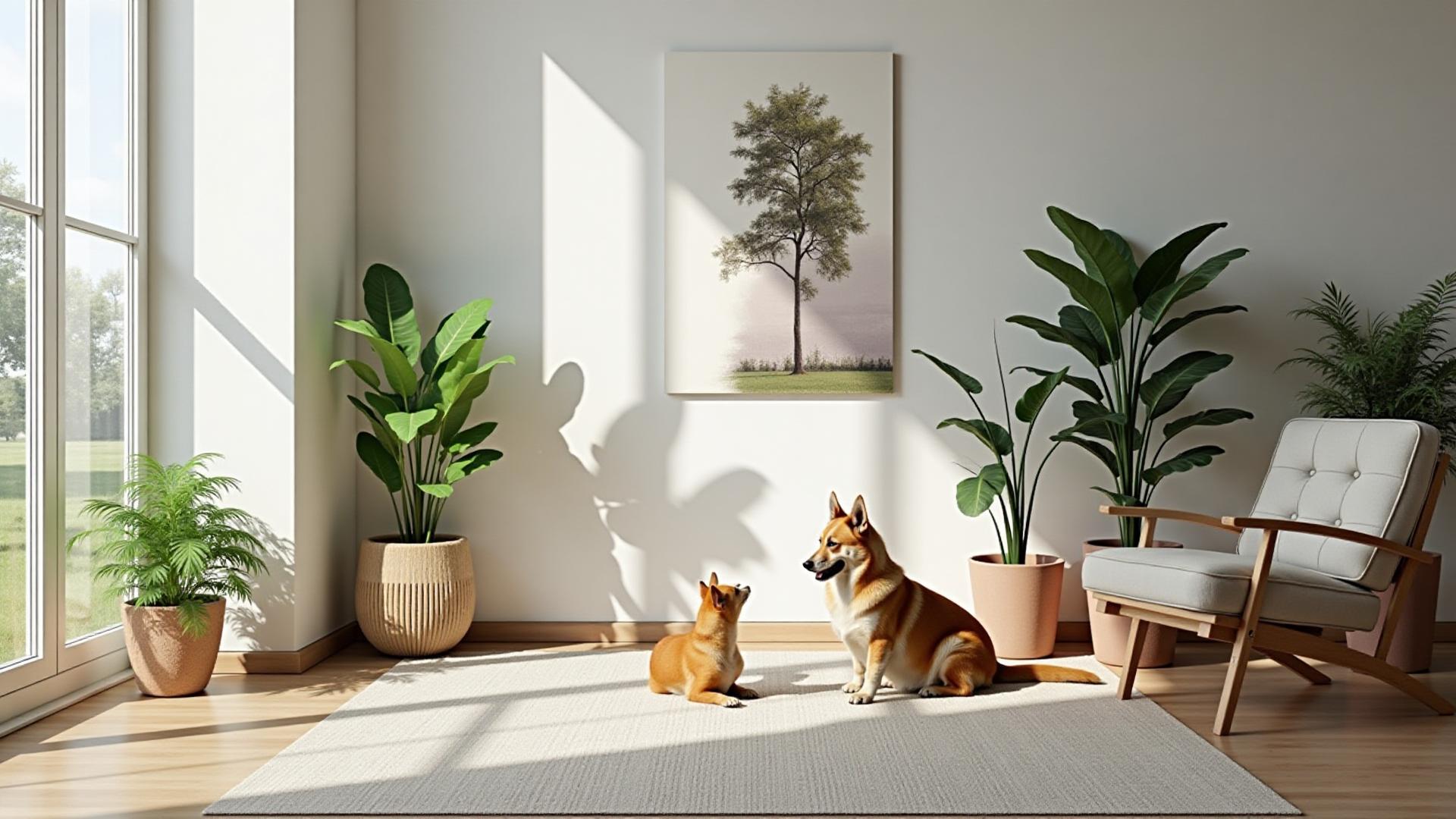
Start with the risks in your own home: plant toxicity, chewing, loose parts and unstable planters. Styling choices can reduce access, but this guide cannot establish that a display is safe for your pet.
Live plants and artificial greenery need different checks. Identify the exact species for live plants; check materials, fixings and labels for artificial foliage. Keep either away from pets that chew or climb.
Check the Exact Plant Species
Not all plants are created equal when it comes to pet safety. Some of the most stunning houseplants can be toxic to cats and dogs, causing anything from mild stomach upset to serious health issues.
Check the species: Use the ASPCA plant database and ask your veterinarian about your pet. The ASPCA notes that eating even non-toxic plant material can cause stomach upset; a non-toxic classification is not permission to chew a plant.
Plan the display: Group plants by texture and height only after checking species and access. Keep trailing foliage away from climbing routes and furniture your pet uses.
Master Strategic Plant Placement
Even a plant listed as non-toxic can cause problems if a pet chews it or knocks over its container. Check the whole display, including pot weight, fixings and loose parts.
Check access: A high shelf is not necessarily out of reach of a climbing cat. Use secure mounting and consider a separate room or barrier rather than relying on height alone.
Room Flow Consideration: Place plants in areas where pets naturally spend less time, such as dining room corners or home office spaces, while ensuring they still receive adequate light.
Implement Protective Styling Solutions
Creative barriers can protect your plants while enhancing your overall design aesthetic. Think beyond basic plant placement to incorporate stylish protective elements.
Avoid loose coverings: Decorative stones, moss and removable parts can be swallowed. Use a secured barrier suited to your pet instead of leaving small loose pieces in the display.
Check the container: Use stable planters and suitable fixings, then inspect them regularly. Keep soil, standing water and plant-care products away from pets.
Plan Areas with Controlled Access
Designate specific areas of your home as pet-friendly plant zones where both your furry friends and greenery can coexist peacefully.
Zone Strategy: Create concentrated plant displays in rooms where you can supervise pet interactions, using baby gates or decorative room dividers when necessary.
Ask before adding edible plants: Discuss any pet grass, herbs or other plants your pet might ingest with your veterinarian.
Quick Checks Before Styling
- • Always research plant toxicity before purchasing
- • Keep loose stones, plant-care chemicals and fallen leaves out of reach
- • Use secured barriers where you need to restrict access
- • Inspect displays for chewing, loose parts and unstable pots
- • Keep a pet-safe plant emergency contact list handy
Styling References: Check Species and Access
These are styling references, not FoliPlace products. Our first home-goods collection is in development.
Spider Plant
Arching leaves for a hanging display. Verify the exact species and secure the container.
Boston Fern
Full foliage for a shelf or stand. Check access and remove fallen plant material.
Parlor Palm
Upright foliage for a corner display. Verify the species and inspect the pot for stability.
Frequently Asked Questions
What should I do if my pet eats a plant?
Contact your veterinarian or ASPCA Poison Control (888-426-4435) promptly. Take photos of the plant and note how much was consumed. Do not assume a plant described as non-toxic is harmless to eat.
Are fake plants a safer alternative for pet owners?
Artificial plants are not automatically pet-safe. Check materials and labels, secure the display and keep it out of reach of pets that chew; loose parts and toppled planters can still be hazards.
How can I keep my pets away from plants?
Use a separate room or secure barrier when needed, and check climbing routes and loose parts. Ask a veterinarian or qualified trainer about persistent chewing. Training alone does not establish that a display is safe.
Start with Species, Materials and Access
Identify the exact plant or material, check how your pet could reach it, and inspect the whole display. If your pet eats a plant or an artificial component, contact your veterinarian promptly.